Save the Children El Salvador needed more than a collection of static pages. Its national website had to support an active publishing operation covering programs, campaigns, news, impact stories, employment and consulting opportunities, institutional projects, publications, and downloadable resources.
I developed a custom WordPress implementation that organizes those distinct responsibilities into clear editorial workflows while presenting them through a consistent, responsive public experience. The result is a content-rich platform that remains manageable for the organization’s team without relying on a visual page builder for its core architecture.
Scope note: This case study covers the national website for Save the Children El Salvador. It does not represent development of Save the Children’s global platform or the websites operated by other national offices.
Designing for a real publishing operation
The primary business goal was to give the organization a reliable platform for communicating its work in El Salvador. Visitors need to understand the organization, discover its programs and campaigns, read current news and stories, find opportunities, and access institutional publications and resources.
Those content types serve different audiences and require different information. Treating everything as a generic page or blog post would have made the editorial experience harder to maintain and the frontend more difficult to query consistently. I instead structured the platform around the way the organization actually publishes.
The current installation contains seven purpose-built content types:
- Campaigns.
- Employment and consulting opportunities.
- Impact stories.
- News.
- Projects.
- Publications.
- Resources.
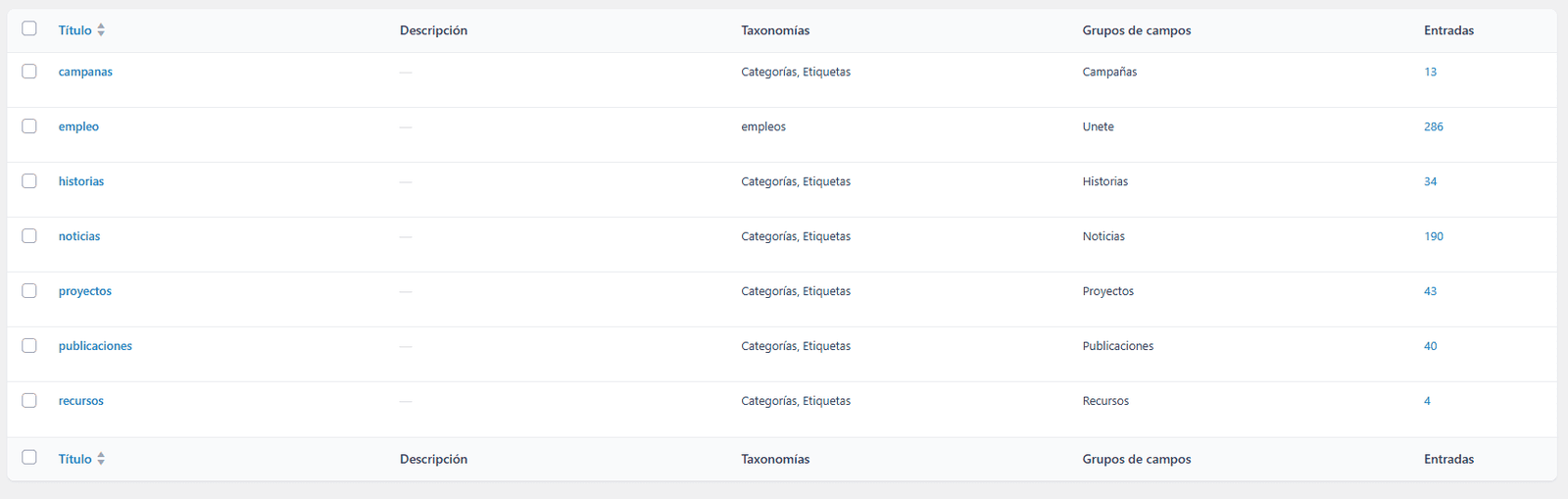
Together, these models support hundreds of structured records. Each section can evolve independently while still sharing the visual language and reusable components of the main website.
Content architecture with custom post types and taxonomies
Each major content family is represented by its own WordPress post type rather than being forced into a single generic structure. Relevant taxonomies provide additional classification for archives, filtering, and discovery.
This architecture makes the public experience easier to navigate and gives the editorial team a clearer administration interface. A campaign is managed as a campaign, a job opportunity as an opportunity, and a publication as a publication. Editors do not need to remember fragile formatting conventions or repurpose unrelated fields.
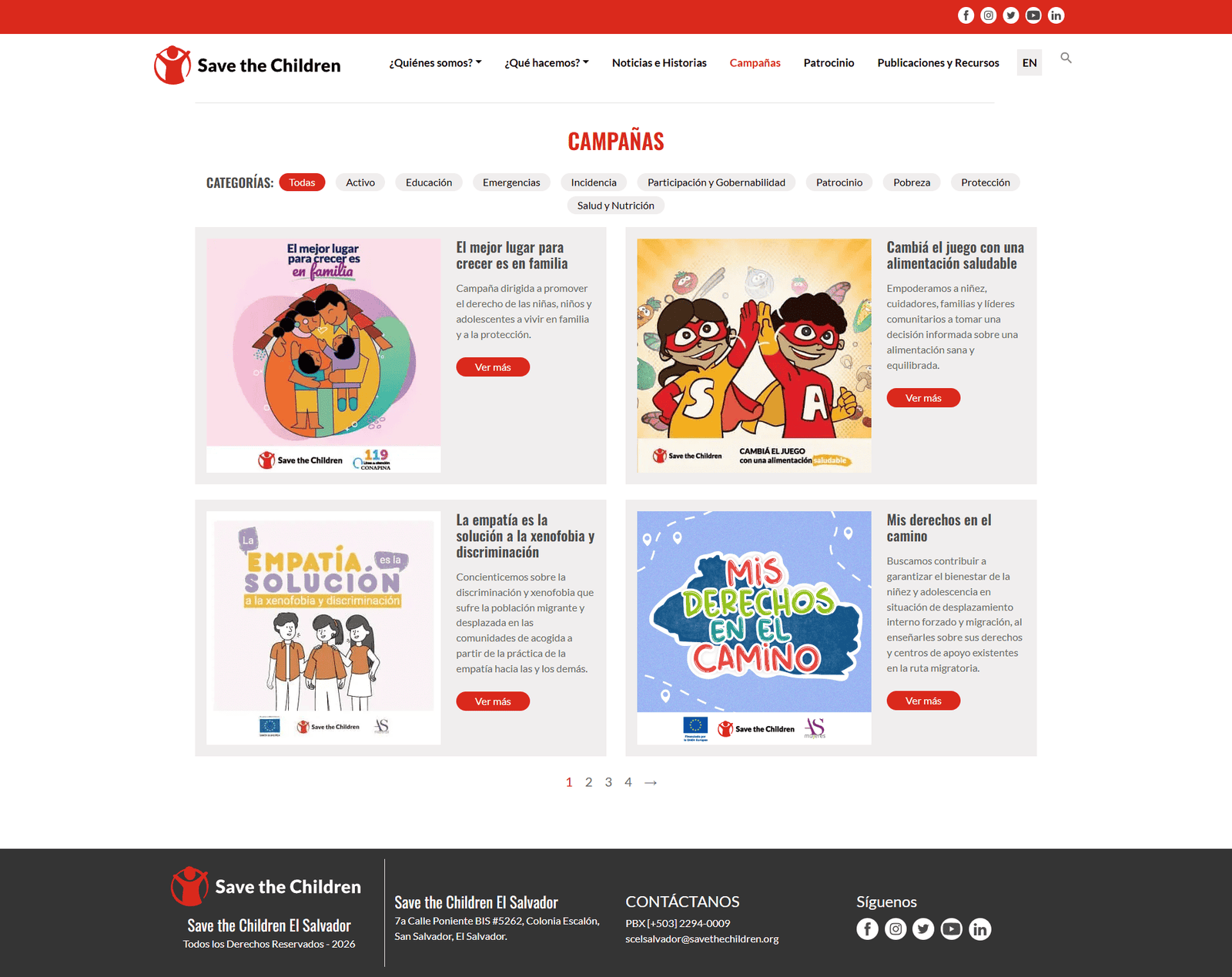
On the frontend, custom WordPress queries and loops retrieve the appropriate content for each context. The homepage brings together recent news and selected stories, while dedicated archive templates provide section-specific presentation, taxonomy filters, and pagination.
The campaigns archive, for example, allows visitors to browse initiatives by topics such as education, emergencies, sponsorship, poverty, protection, and health and nutrition. The opportunities archive separates employment, consulting, and procurement-related content while preserving deadlines and other relevant information.
Purpose-built editing experiences with ACF
Advanced Custom Fields Pro provides structured fields tailored to the needs of each content type. Instead of asking editors to assemble complex layouts manually, the administration experience exposes the exact inputs required by each template.
Global theme settings are also managed through dedicated options pages. Footer identity, organization details, contact information, and social networks can be maintained centrally. Repeater fields allow the team to add, remove, or reorder social profiles without editing theme files.
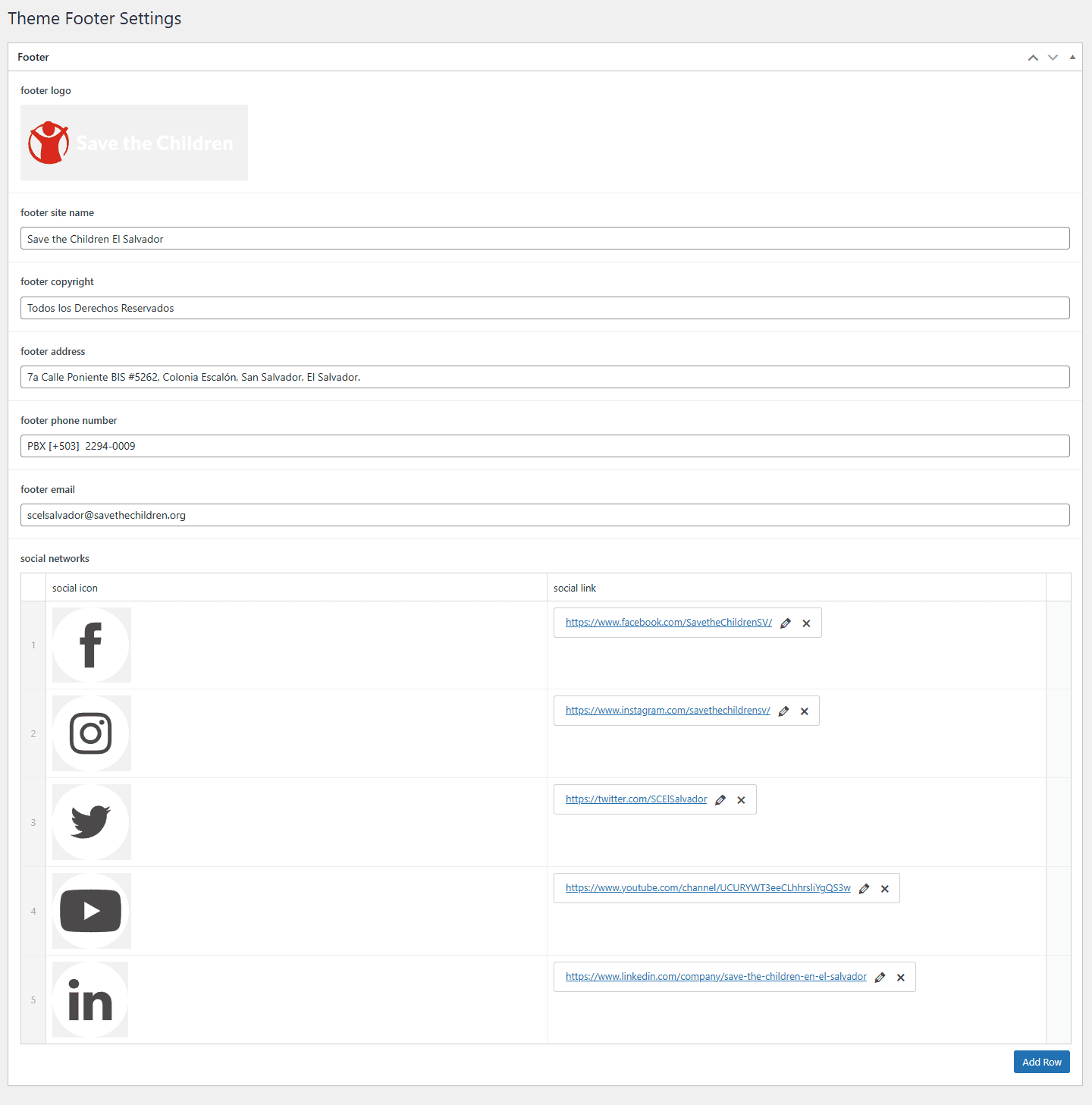
This approach creates a controlled relationship between content and presentation. Editors retain meaningful control over the information they publish, while templates preserve accessibility, responsive behavior, brand consistency, and layout integrity.
A custom responsive frontend
The public experience was implemented as a custom WordPress theme using Bootstrap as a responsive foundation. Reusable PHP templates and shared components provide consistent navigation, cards, archive layouts, filters, pagination, calls to action, and footer content across the platform.
The homepage acts as a concise overview of the organization’s work, combining a prominent campaign message with program information, current news, and personal stories. Other sections use layouts suited to their content rather than repeating one universal page-builder template.
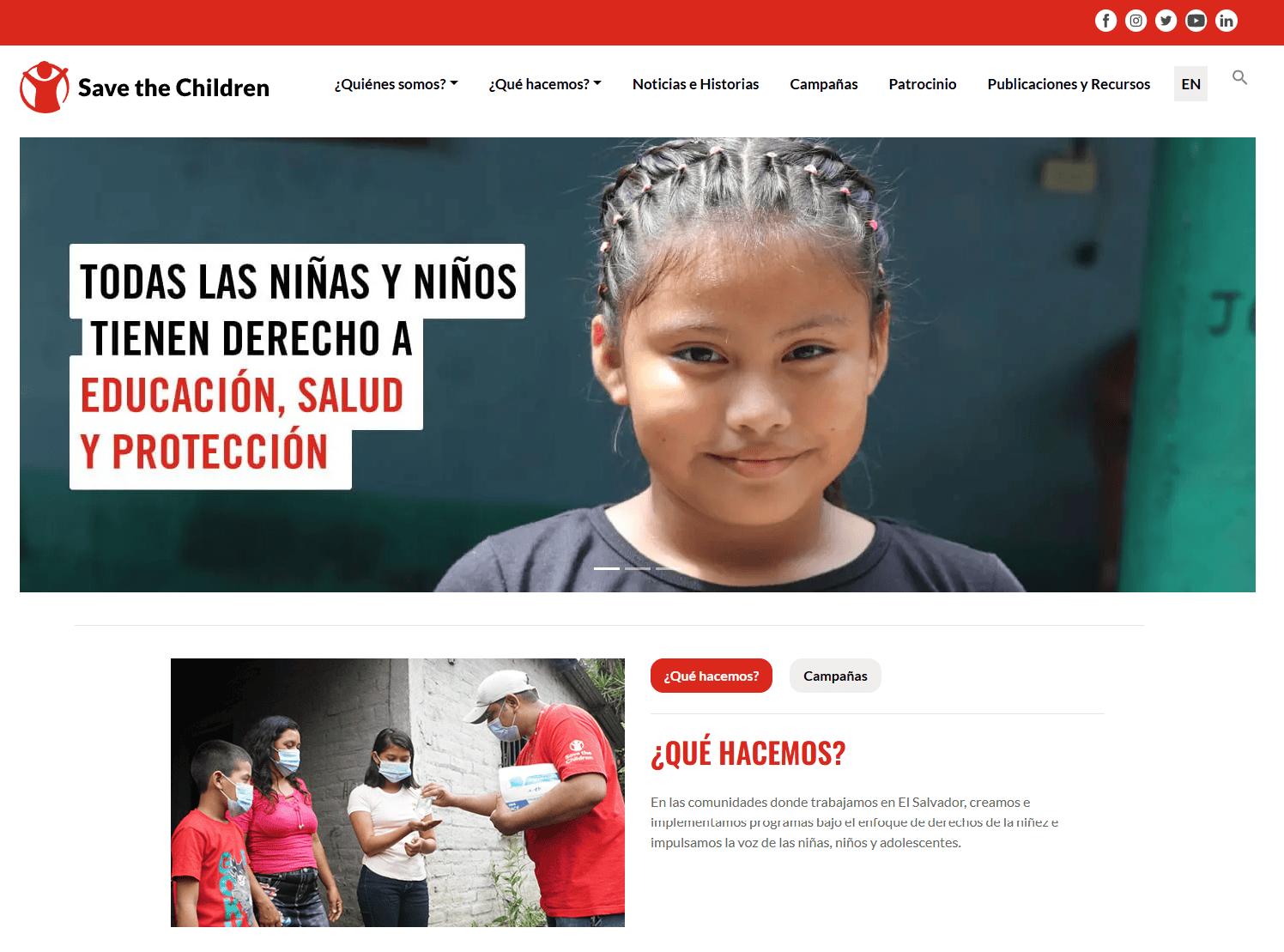
The “Who We Are” experience brings together institutional information, tabbed content, organizational history, and a geographic view of work across El Salvador. Campaign and opportunity archives prioritize scanning and filtering, while stories and news use more editorial presentation patterns.
Responsive behavior was considered as part of the component architecture so that navigation, media, cards, filters, and text remain usable across desktop, tablet, and mobile devices.
Performance and accessibility as production requirements
Performance was treated as an engineering requirement rather than something delegated entirely to an optimization plugin. The theme uses focused templates, responsive images, reusable assets, and intentionally limited frontend behavior to reduce rendering cost.
A documented PageSpeed Insights run achieved 100 in Performance, Accessibility, Best Practices, and SEO. A later repeat measurement captured while preparing this case study scored 99 in Performance and 100 in the other categories, illustrating both the strength of the implementation and the normal variation between individual Lighthouse runs.
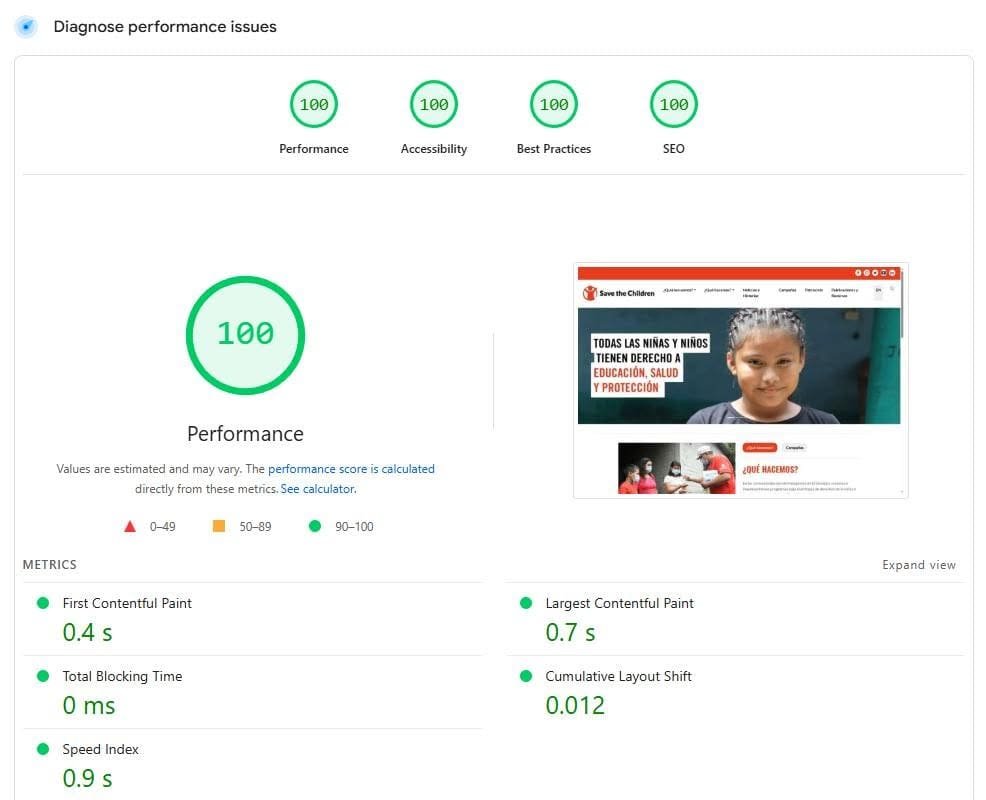
The performance work supports a practical organizational goal: campaigns, news, opportunities, and resources should remain accessible to visitors using different devices and network conditions. Fast rendering, stable layouts, semantic structure, and responsive behavior improve the experience for every audience the organization serves.
Building for long-term editorial use
The strongest evidence of the architecture is that it continues to support active publishing. New campaigns, opportunities, stories, news items, projects, and publications can be added through the same structured workflows without requiring a developer to reconstruct layouts for each update.
Separating content from presentation also makes future maintenance safer. Shared templates can be improved centrally, taxonomies can grow as organizational needs change, and global information can be updated from theme settings rather than repeated across multiple pages.
This is the kind of WordPress work I value most: not merely delivering a homepage, but creating a maintainable publishing system aligned with the organization’s real processes.
What this project demonstrates
The Save the Children El Salvador platform demonstrates how custom WordPress development can support a large and varied content operation without sacrificing editorial clarity or frontend performance.
It combines information architecture, custom post types, taxonomies, ACF field design, reusable PHP templates, responsive frontend implementation, filtered archives, and performance optimization in one cohesive system. It also shows the importance of designing the WordPress administration experience with the same care as the public interface.
Key contributions
- Developed a custom WordPress theme for the Save the Children El Salvador national website.
- Structured the platform around seven purpose-built custom post types.
- Created content-specific ACF field groups and editorial workflows.
- Implemented custom taxonomies for classification and filtered discovery.
- Built reusable PHP templates, archive queries, loops, filters, and pagination.
- Created dynamic homepage sections populated from current organizational content.
- Built centralized theme options for footer identity, contact information, and social networks.
- Implemented responsive layouts with Bootstrap and custom frontend styling.
- Optimized rendering, responsive media, accessibility, SEO, and Core Web Vitals.
- Achieved a documented 100/100/100/100 PageSpeed Insights result.
- Delivered an architecture capable of supporting hundreds of structured content records and continued publishing.
Technologies
WordPress, PHP, Advanced Custom Fields Pro, custom post types, custom taxonomies, Bootstrap, JavaScript, jQuery, HTML5, CSS3, responsive images, and performance optimization tooling.