
Those who know me know that I have a particular soft spot for parakeets and parrots. For years, I’ve spent part of my free time observing them, photographing them, and learning everything I can about them, especially our native wild species.
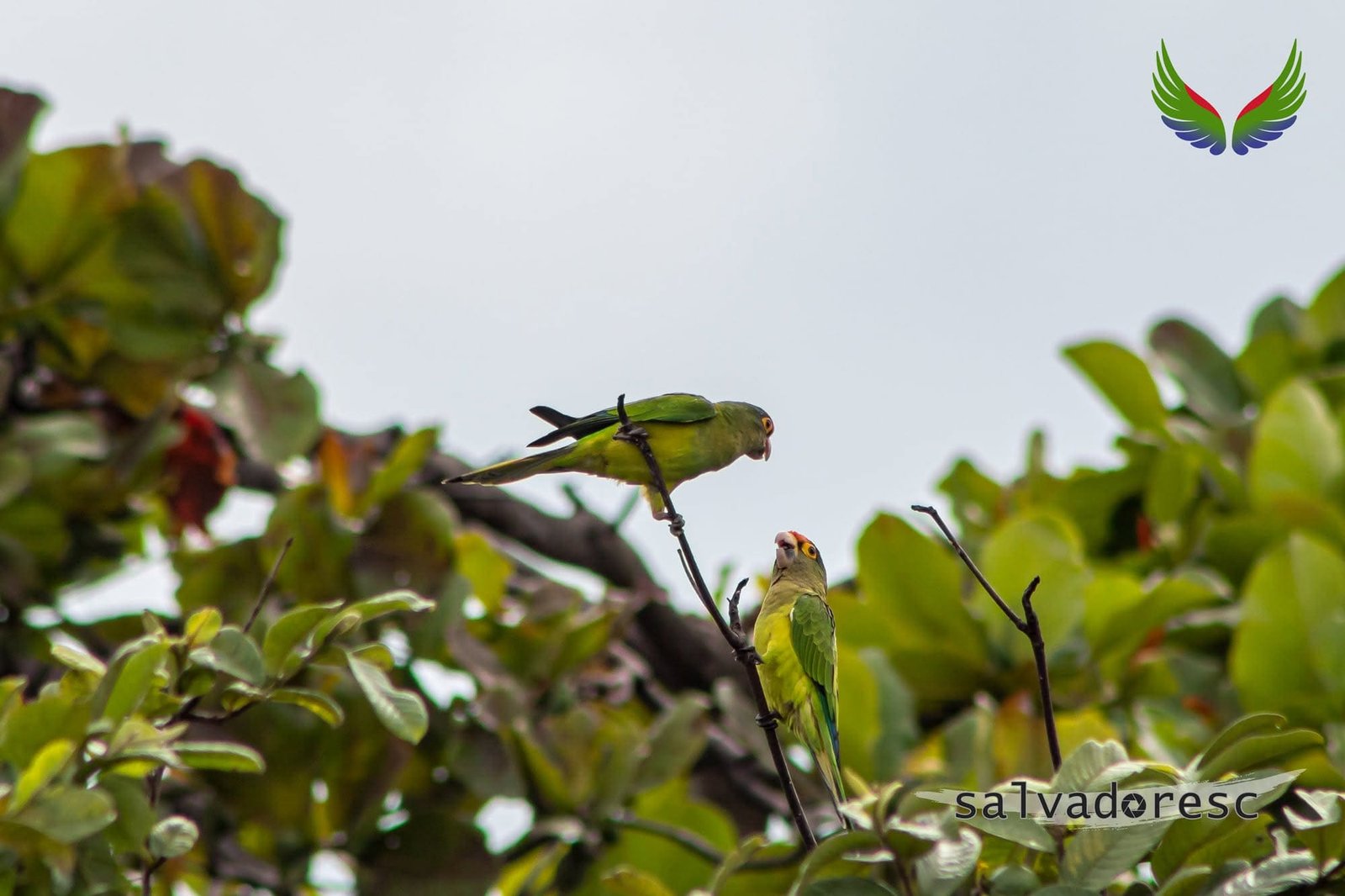
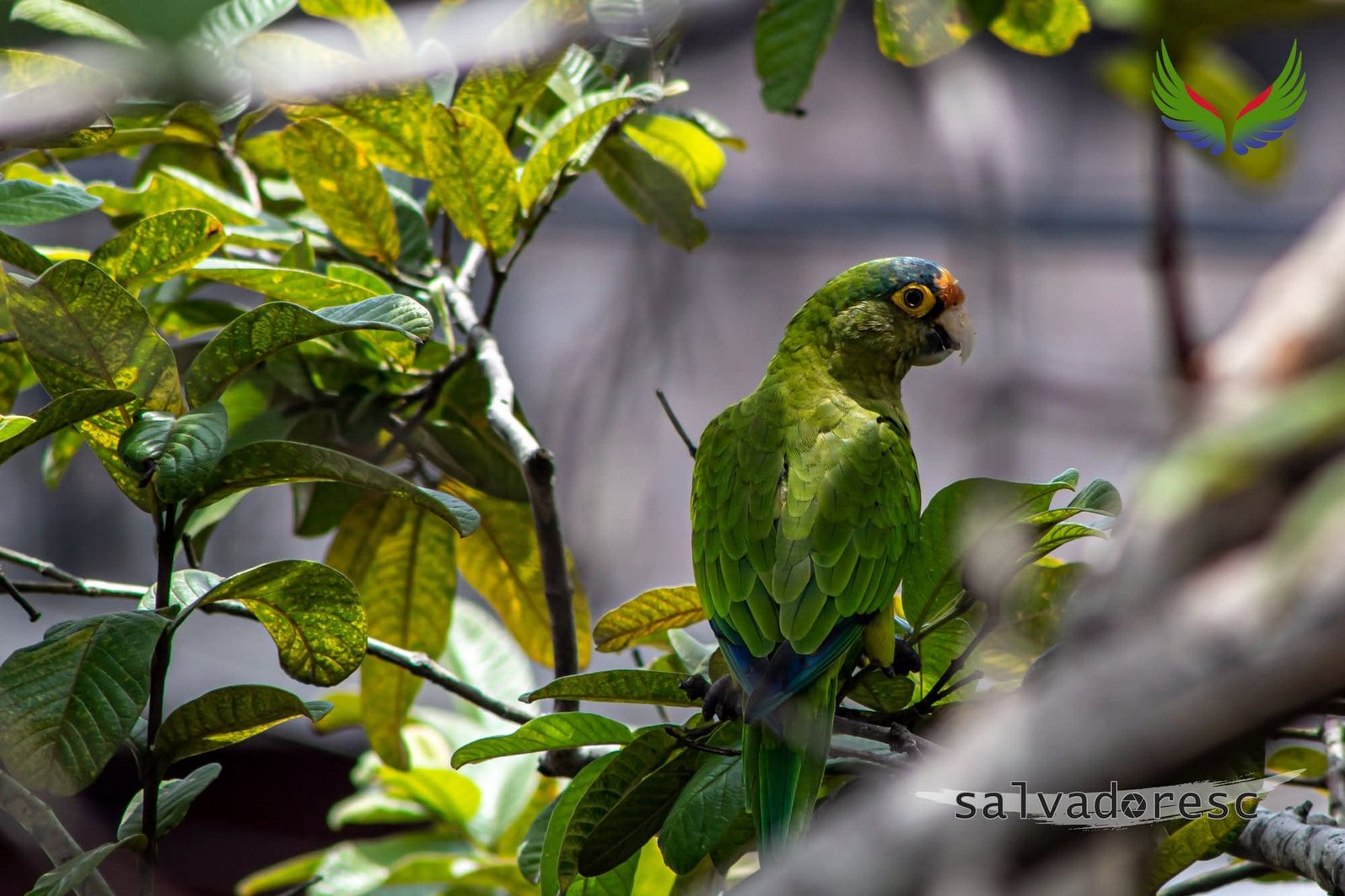
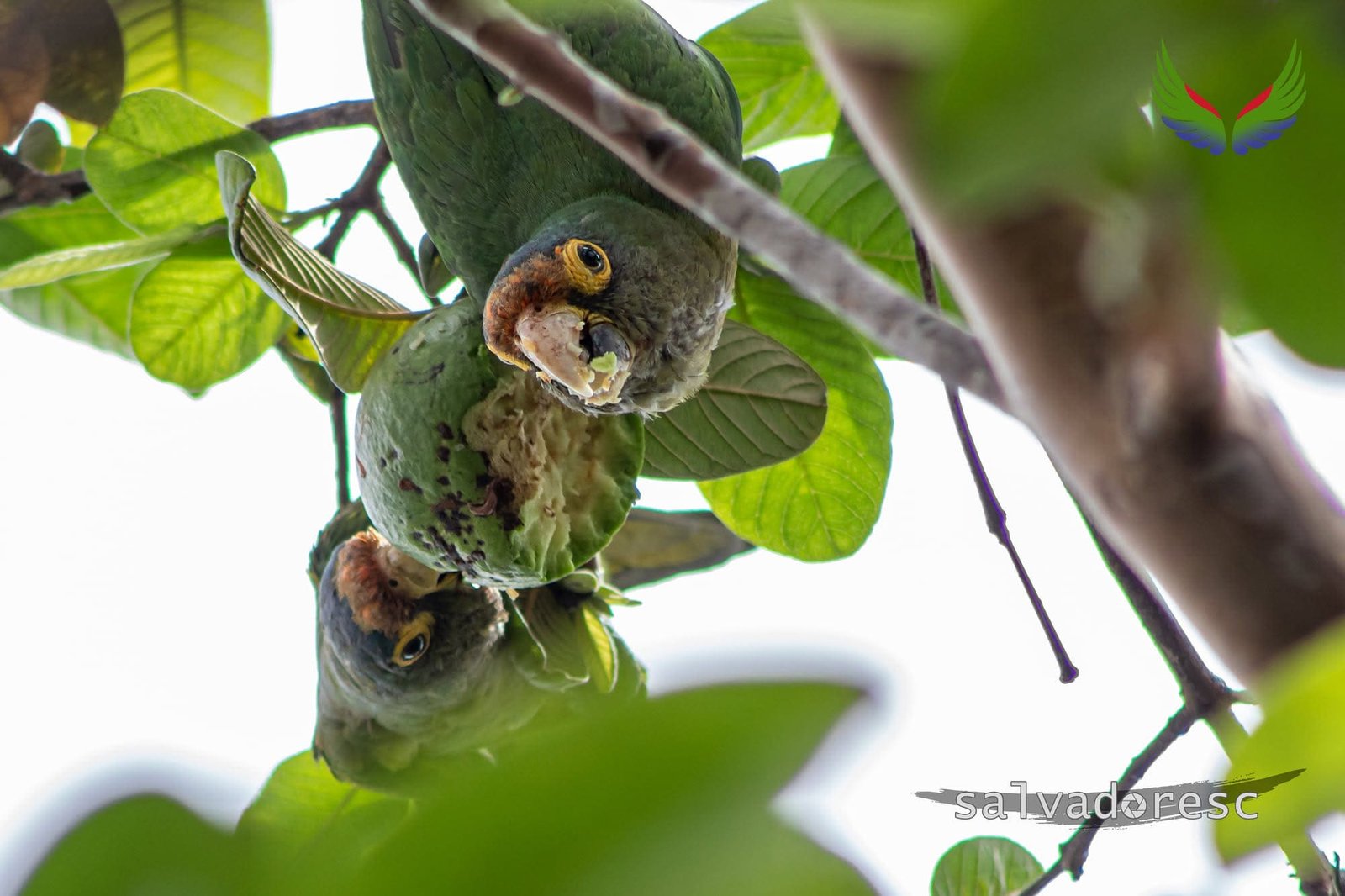
I’m also incredibly lucky to live in a place where a guava tree has practically become a small gathering spot for several kinds of birds. Among its regular visitors are chocoyos, or orange-fronted parakeets (Eupsittula canicularis), along with other species of parakeets.
Over the years, I’ve been able to watch them feed, interact with one another, and even arrive with their young. When you spend enough time observing a species, you begin to recognize certain behaviors and vocalizations. For example, the persistent calls of juveniles begging their parents for food are pretty hard to mistake once you’ve heard them enough times.
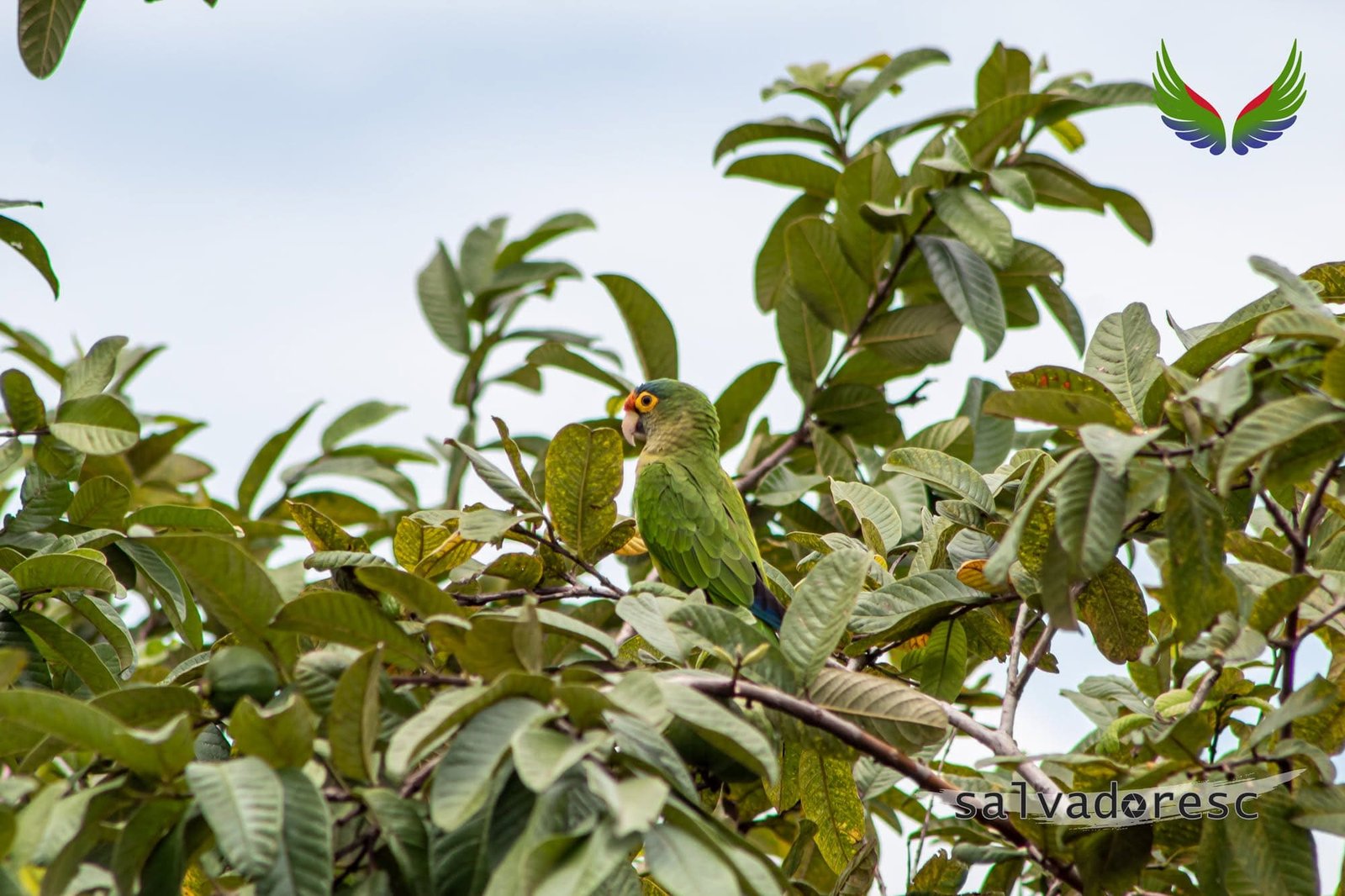
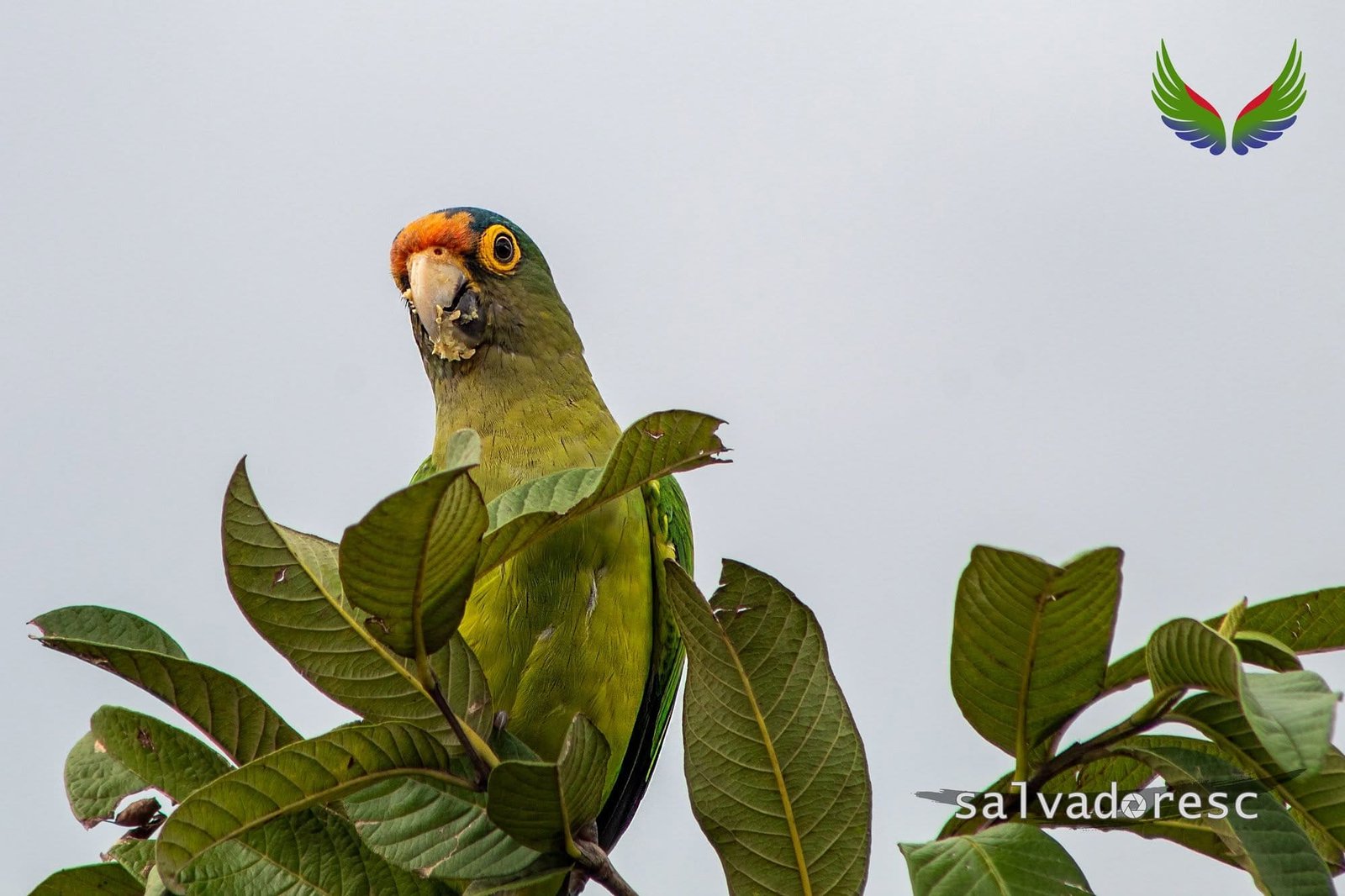
These observations seemed like just another one of those small everyday joys that parakeets bring me.
Until one day, something very different happened.
Something Had Happened in the Guava Tree
That day, I suddenly heard a chocoyo screaming in a way that was clearly different from the group’s usual vocalizations.
They were cries of alarm and pain.
I immediately went outside to check.
When I arrived, I found a chocoyo perched on a fairly low branch. That alone caught my attention, because they normally stay much higher up, among the canopy and the branches where they feed.
I slowly tried to get closer so I could take a better look.
The bird tried to escape.
But it couldn’t.
It attempted to fly, lost control, crashed into a wall, and fell to the ground.
At that point, it was obvious that it was injured.
I didn’t see what animal had attacked it, so I can’t say with certainty what was responsible.
However, I do have a few plausible suspects based on what I’ve observed in the area. A pair of hawks regularly visits the surroundings and recently raised a juvenile, which I’ve seen flying over the area and even passing low near the guava tree. There are also cats nearby, and I’ve seen squirrels competing with the chocoyos over these same trees.
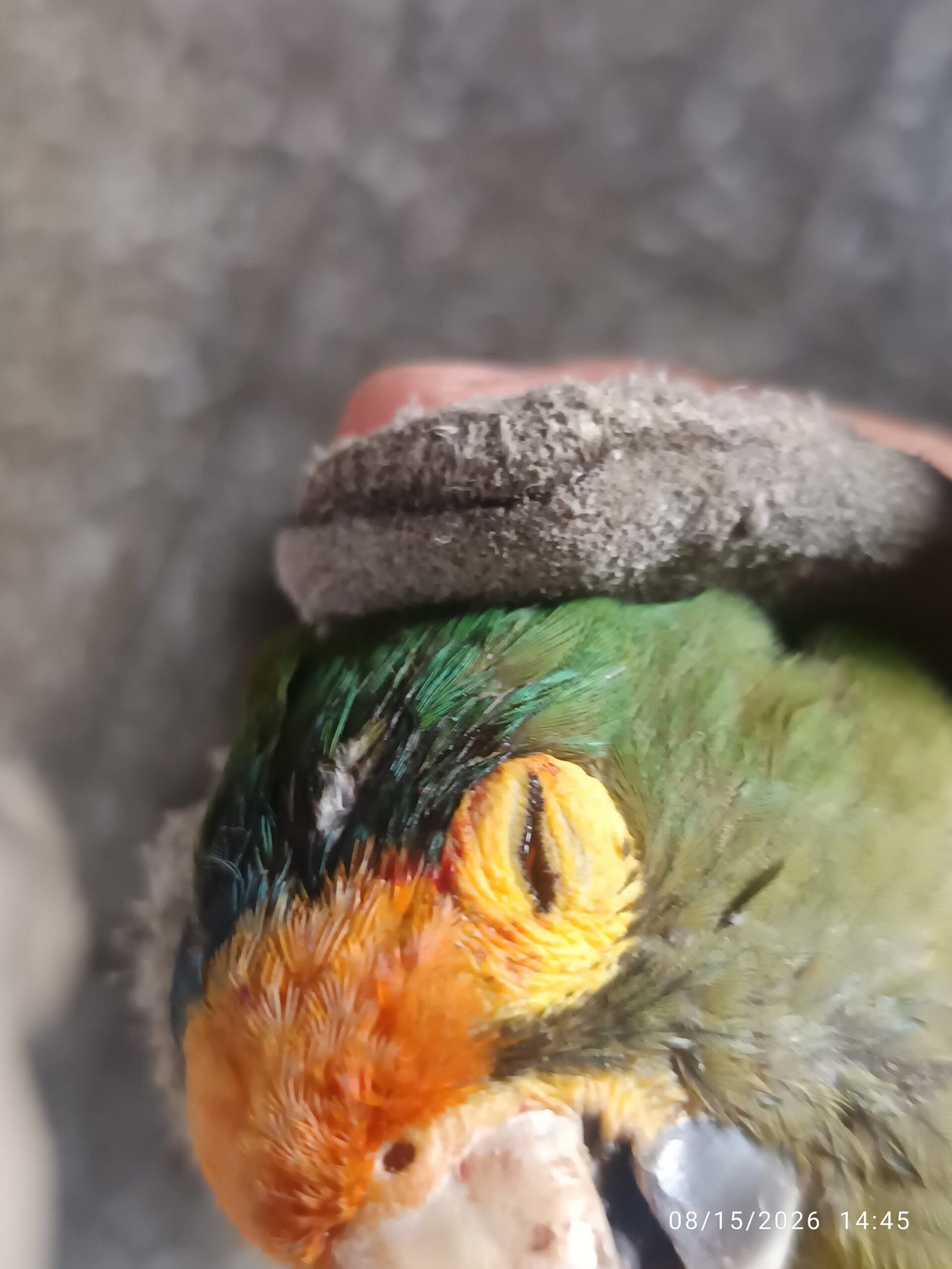
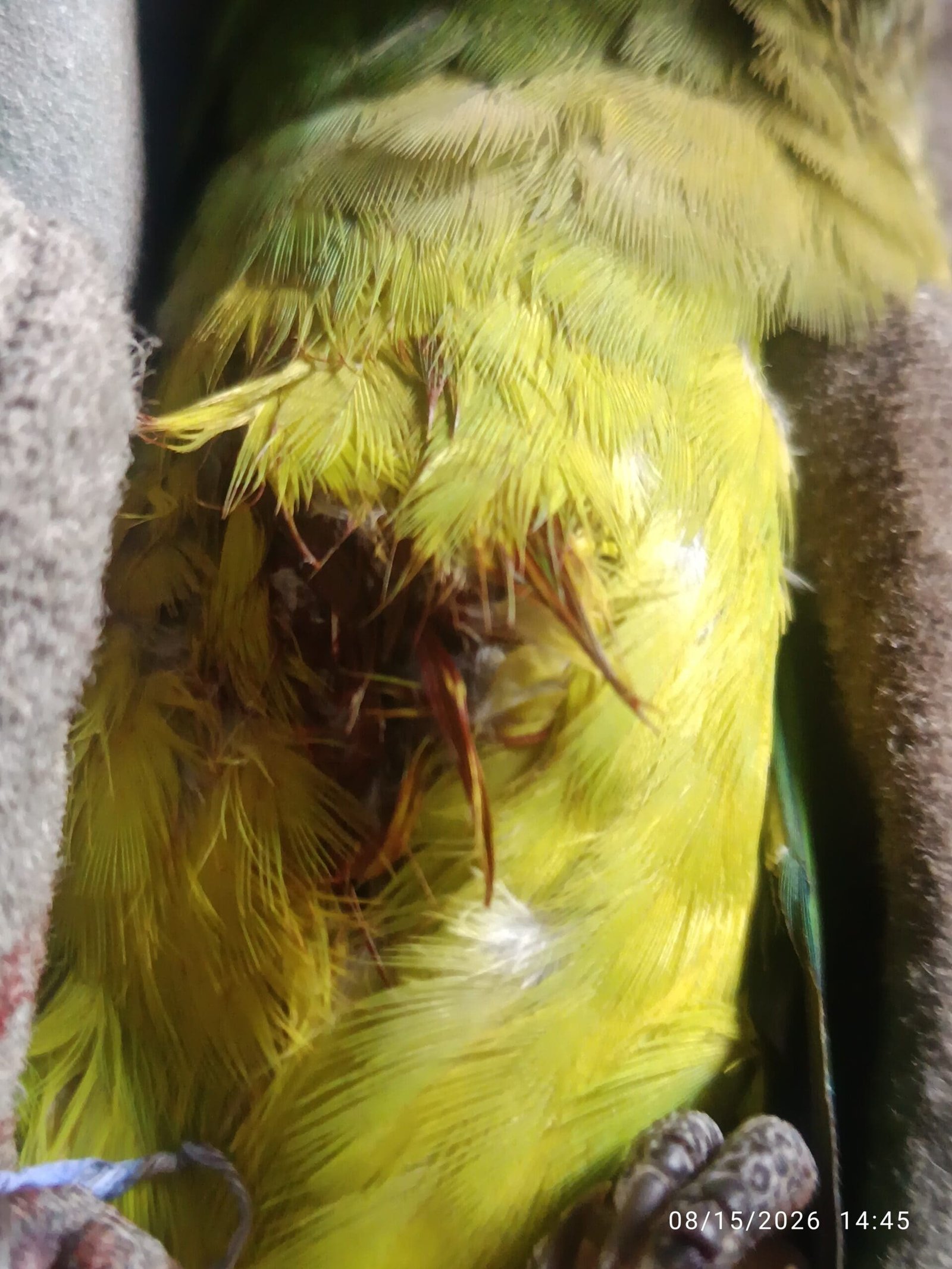
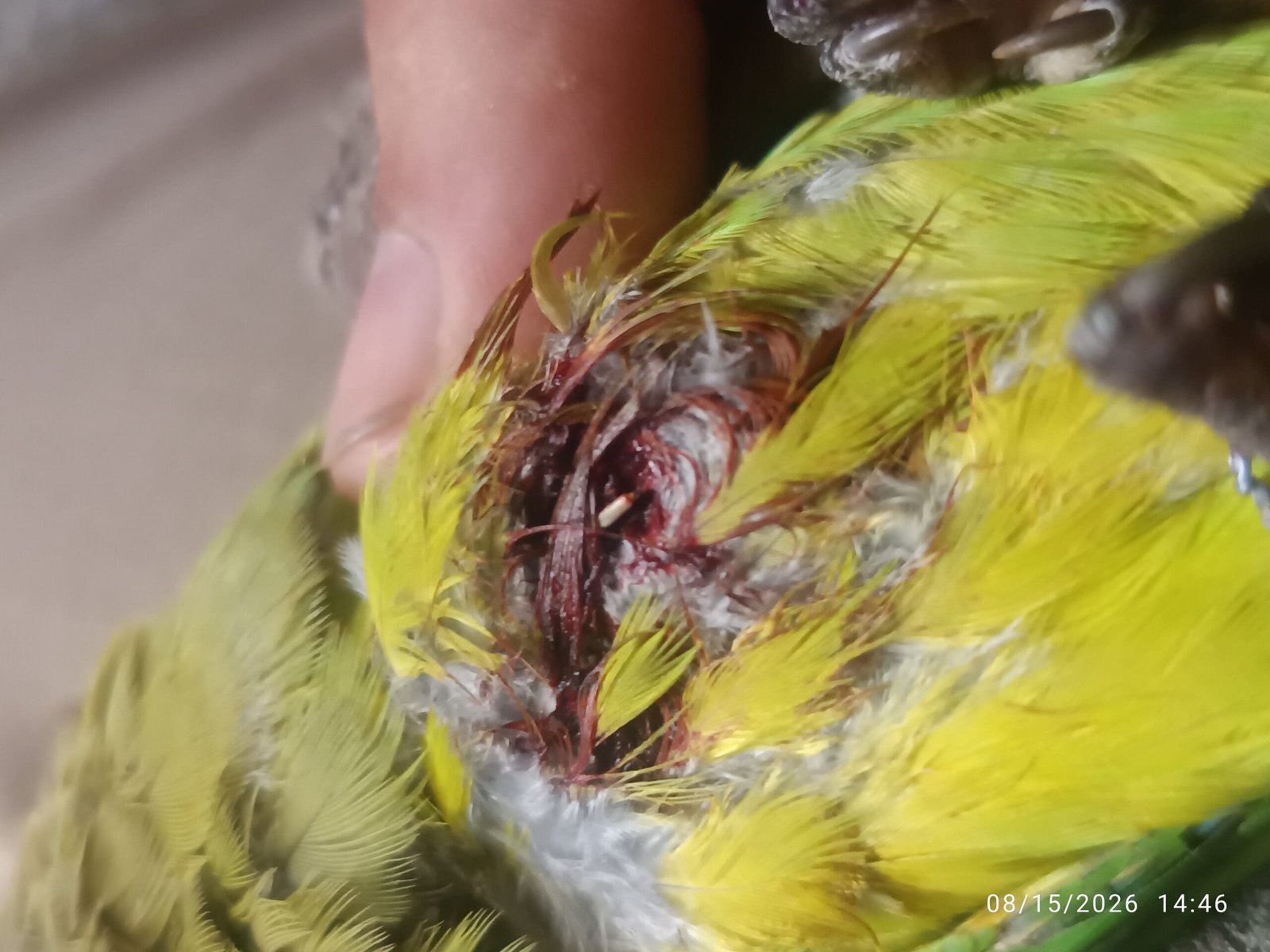
Some of the injuries were consistent with an attack. In addition to visible wounds on the head and chest, the bird had a small puncture beneath one wing. That injury could have been caused by either a claw or a bite, but without witnessing the incident, it would be impossible to determine what happened based on the wound alone.
It’s also possible that some of the injuries became worse when, already weakened, the bird attempted to fly, hit the wall, and fell to the ground.
So I have suspects, but no culprit. XD
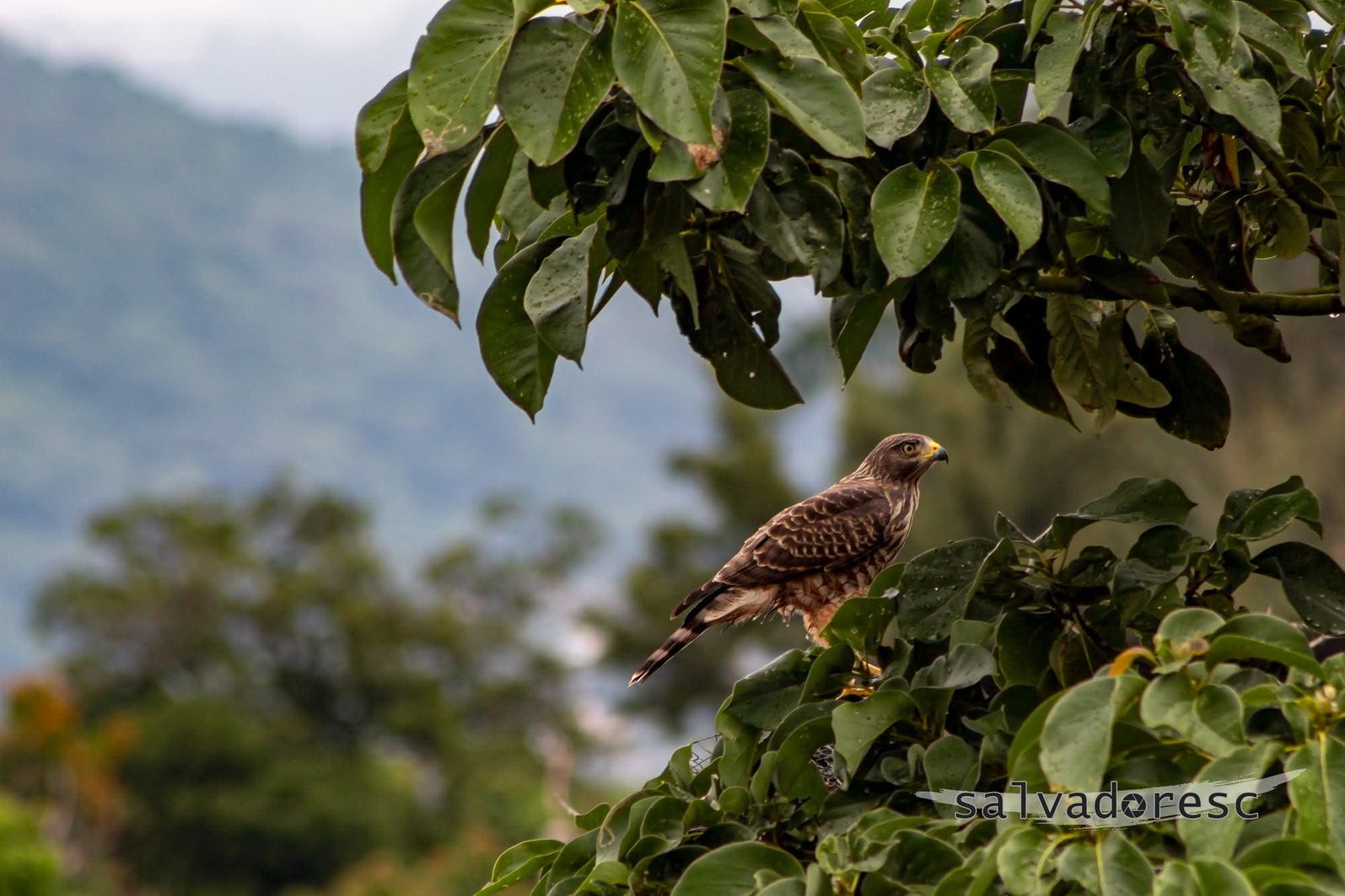
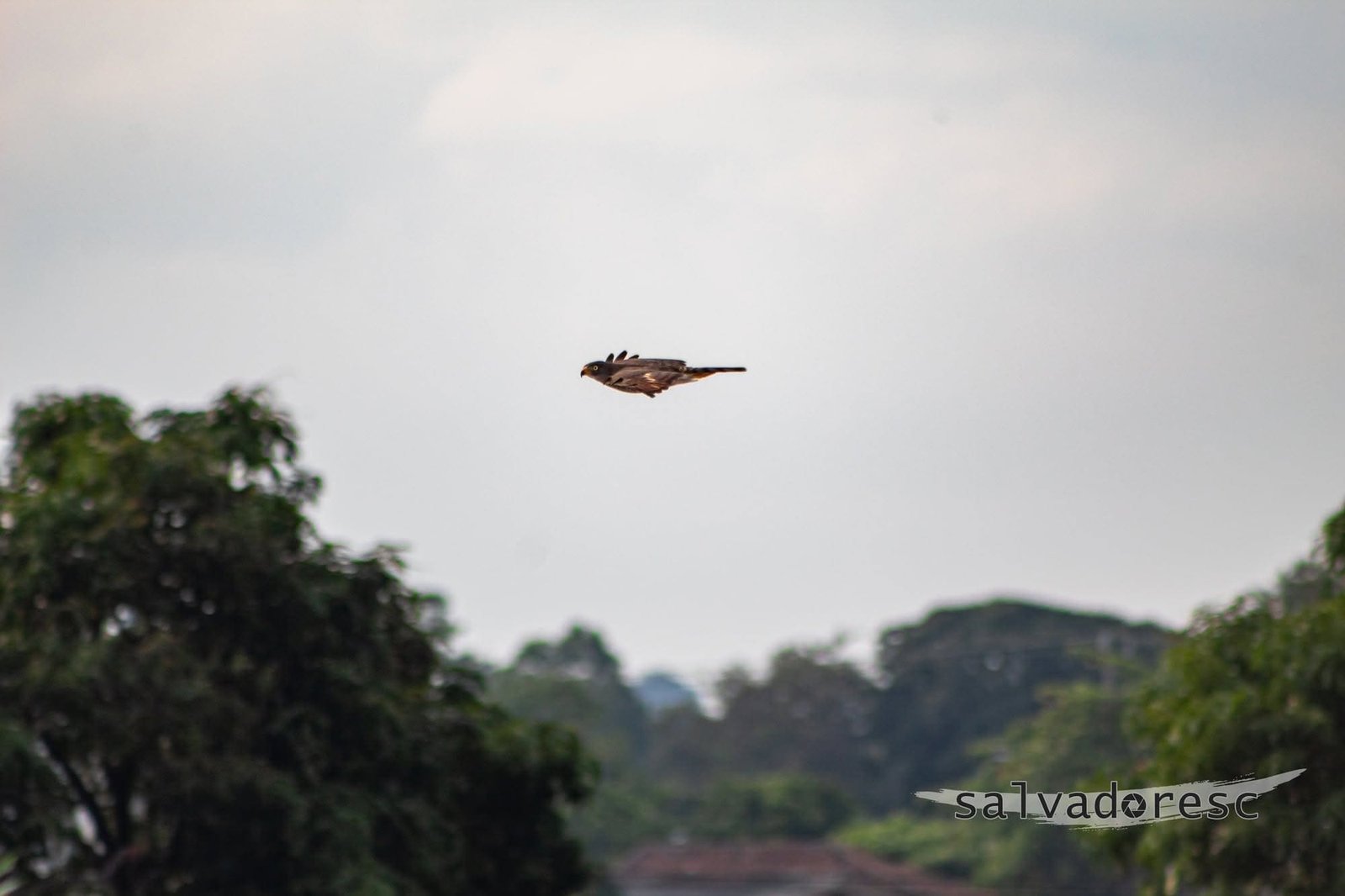
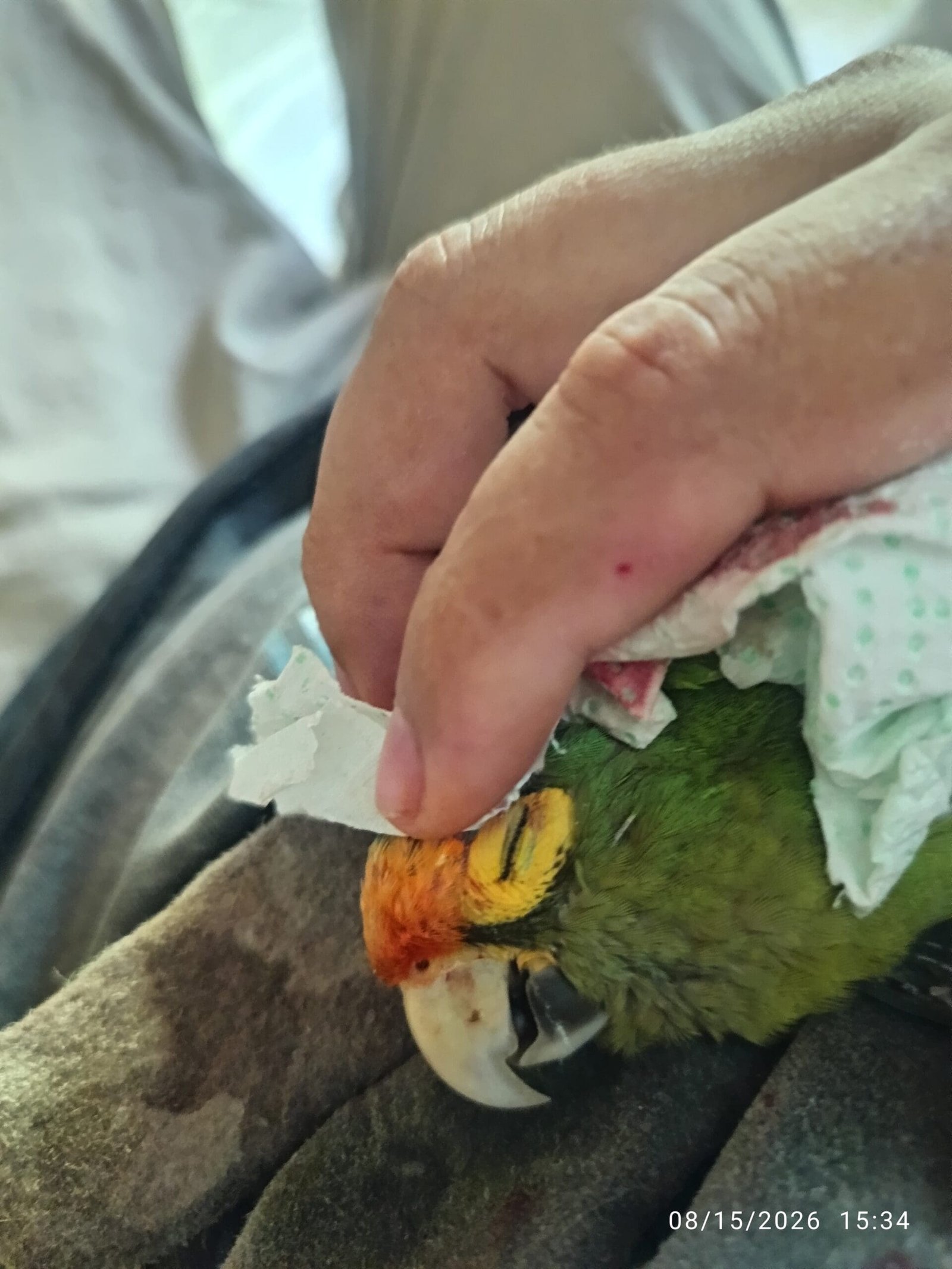
What I could see was that the bird had suffered several injuries and was bleeding.
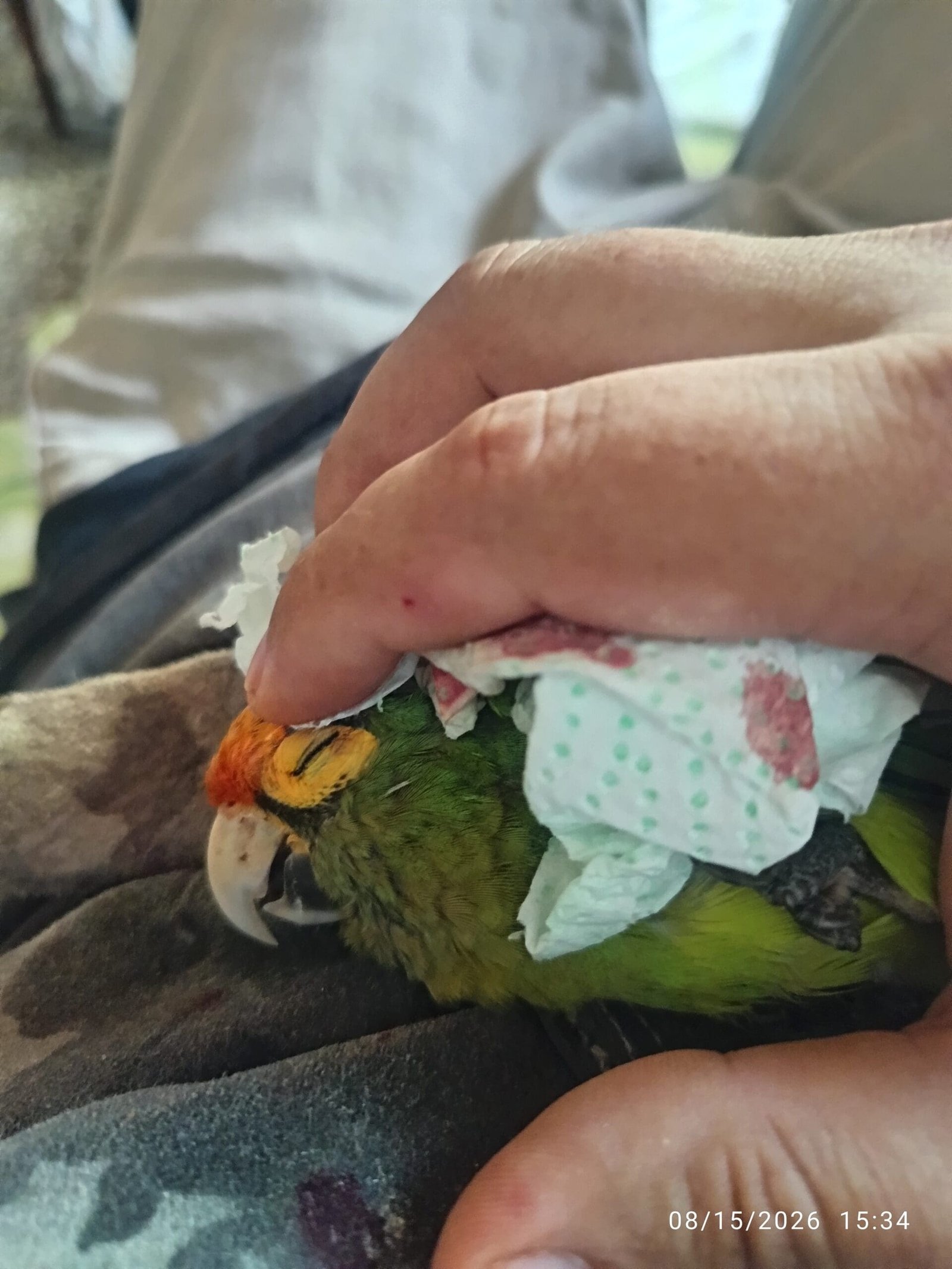
There was blood around its head, significant swelling around one eye, and other wounds on its body. Later, a small puncture wound was also found on its back, hidden beneath one wing.
One of the wounds on its head was bleeding quite heavily.
During those first few minutes, my priority was to control the bleeding, handle the bird as little as possible, and keep it stable while waiting for a veterinarian I trust to arrive.
At times, the bird was so weak that it could no longer even remain standing.
Honestly, I thought it might die.
There Is a Long Road Between Rescuing an Animal and Being Able to Release It
The veterinarian took care of the chocoyo and performed the appropriate evaluation. Once it had been stabilized and after several days of observation, we began considering the possibility of returning it to the wild.
And this is where something I consider extremely important comes in:
rescuing a wild bird does not automatically mean it is ready to be released.
In this case, we had one enormous advantage.
We knew exactly where it had come from.
This wasn’t a bird with an unknown history or an animal that had spent years in captivity. It was a wild individual that had been picked up practically in the same place where it had been living.
I had been observing chocoyos in that area for years. I knew they used those trees for feeding, I knew groups of the species regularly visited the area, and I even had photographic records of them.
That’s why I suggested that, if the bird managed to recover completely, the ideal thing would be to return it to the exact same place where it had been found.
It was familiar territory.
There, it knew where to find food, knew the surroundings, and there was also the possibility of reuniting with the other individuals it had interacted with before being injured.
The veterinarian agreed.
But there was still something essential missing.
Being Able to Fly Is Not the Same as Being Ready to Survive in the Wild
When the chocoyo returned to my care for a possible release, I decided to first conduct a few flight tests in a controlled environment.
And something happened that perfectly demonstrated why a release should never be rushed.
The bird could fly.
It could take off and gain some height.
But after covering only a few meters, it began to lose strength and altitude.
It became exhausted very quickly.
It reached a point where the fatigue was so obvious that, when I went to retrieve it, it barely even tried to get away.
For me, that was enough.
It wasn’t ready.
It could move its wings.
It could take off.
But that didn’t mean it had regained the stamina necessary to survive outside.
In the wild, a parakeet needs much more than the ability to fly a few meters. It needs to move between trees, search for food, follow other individuals, respond to threats, maneuver, and escape potential predators.
A sudden loss of strength in a controlled environment simply means someone picks the bird up.
A sudden loss of strength in the wild could mean falling to the ground in front of a cat, ending up in the street, becoming trapped somewhere dangerous, or being captured by a person.
So I decided not to release it yet.
Waiting Is Also Part of a Successful Release
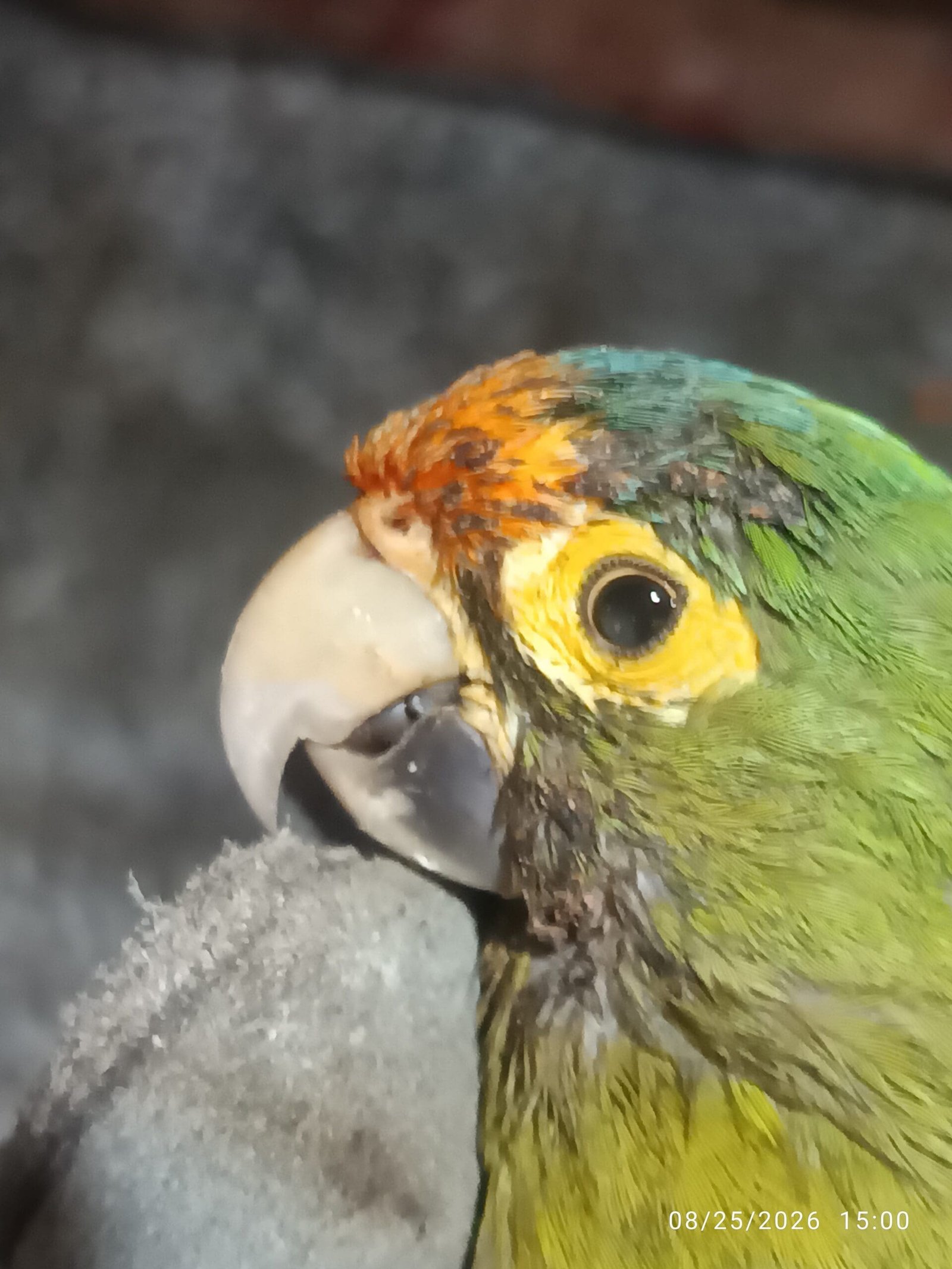
Over the following days, we continued monitoring its progress.
The wounds began to heal, the swelling around the eye disappeared, and its overall condition improved considerably.
It also began regaining strength.
I continued performing controlled flight tests.
Each day, it was able to fly better and for longer periods of time, although at first it still showed signs of fatigue.
And then another small complication appeared.
The guavas on the tree were beginning to run out.
The chocoyos that normally visited had started coming less frequently.
My original intention was to release the bird when other chocoyos were nearby. It seemed ideal for it to immediately hear or see other members of its species upon leaving.
But it also didn’t make sense to keep a recovering wild animal in captivity indefinitely simply because I was waiting for its group to show up at exactly the right moment.
I asked for advice again.
In this particular case, because this was an adult individual that had already lived freely in this same area, it wasn’t an animal that needed to “learn” how to be a chocoyo or join a flock for the first time.
It already knew the area.
It already knew the other chocoyos.
It knew where to find food and how to move through the surroundings.
So when its flight ability finally seemed sufficiently recovered, we decided to proceed.
And Then, Completely by Chance…
The day came.
I had been watching for the chocoyos for quite some time, and on that particular day, a few of them appeared in a nearby tree.
They weren’t in my guava tree, but they were close enough to be heard.
So the moment had arrived.
We placed the cage in a position where the bird would have a completely unobstructed exit.
We opened the door.
And waited.
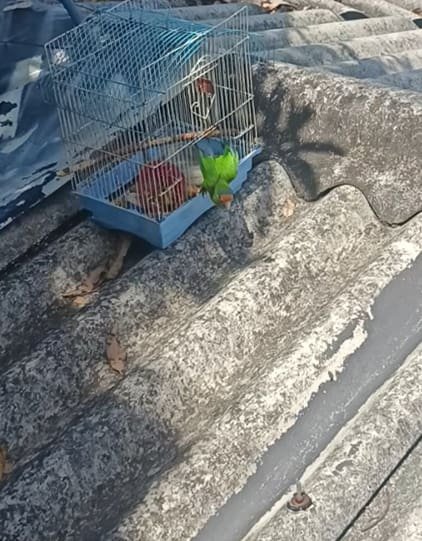
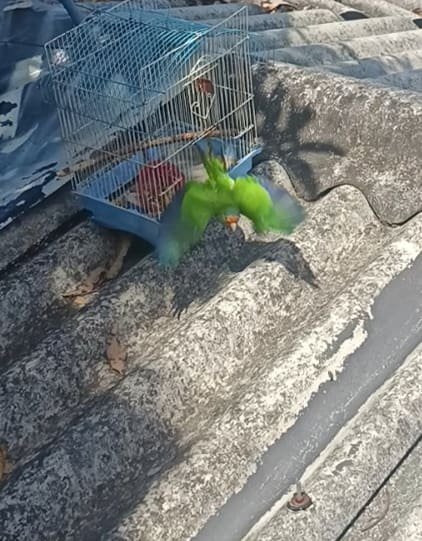
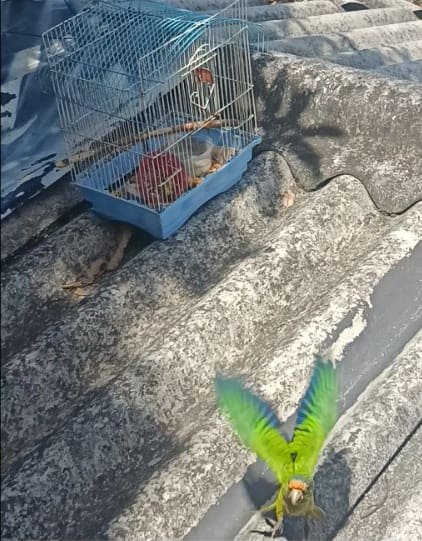
There was no throwing the bird into the air.
There was no need to force it to fly.
The final decision was its own.
It came out.
It flapped its wings and began flying away.
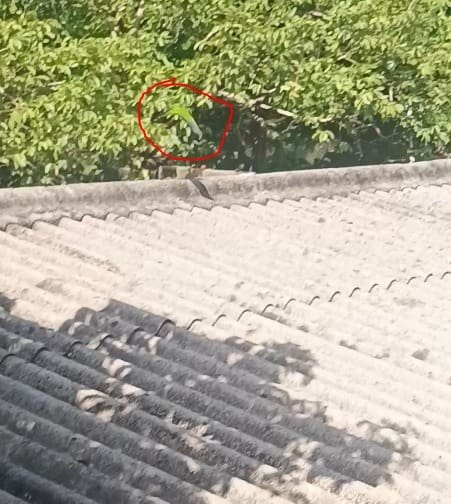
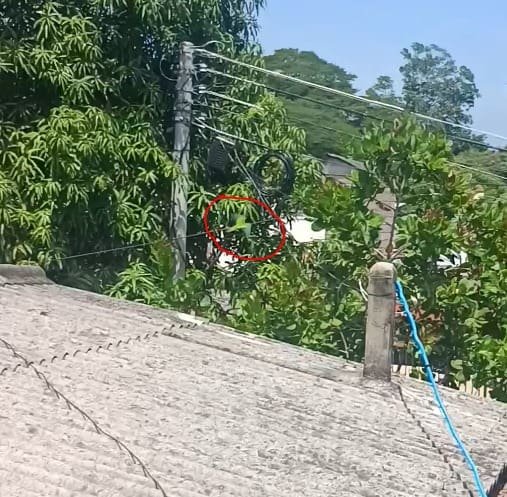
At first, it flew past the nearby vegetation.
Then it kept going.
It moved farther and farther away.
And most importantly to me, what I had seen during those first flight tests did not happen.
It didn’t immediately begin losing altitude from exhaustion.
It kept flying.
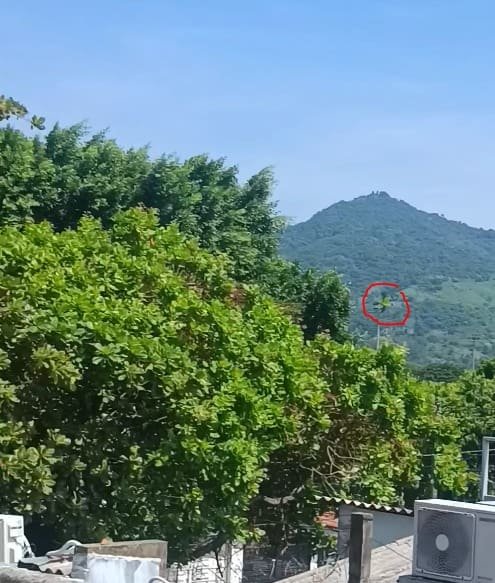
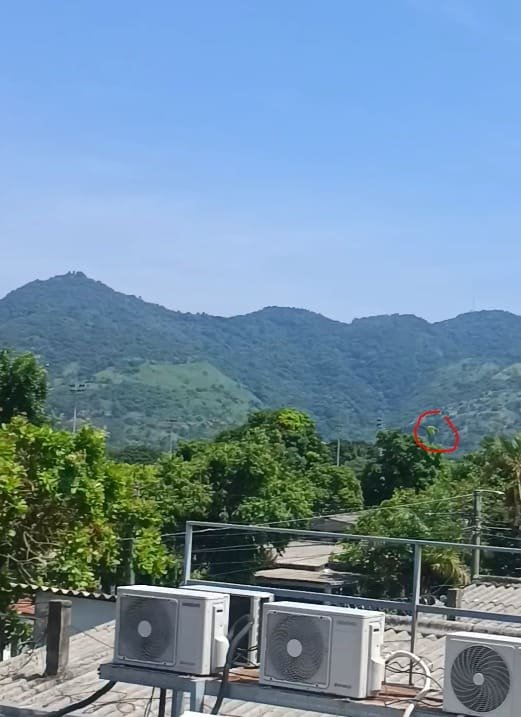
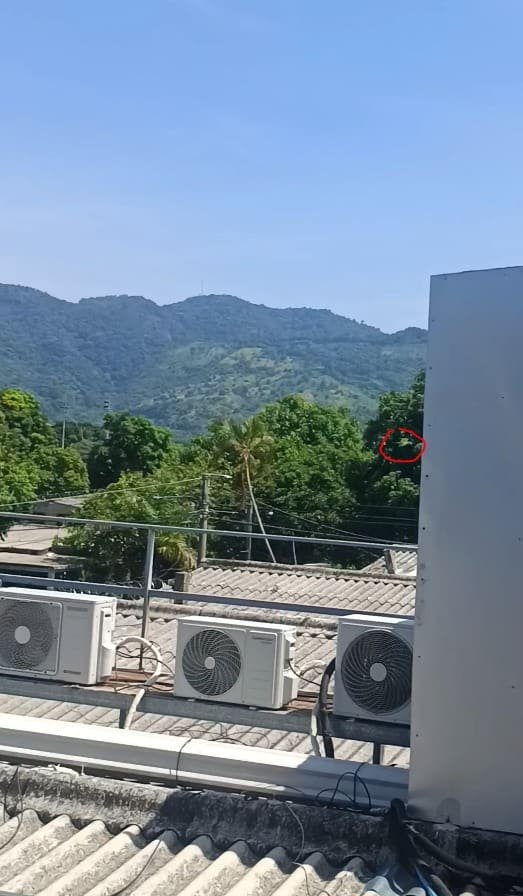
Within seconds, that little chocoyo that only days earlier I had held in my hands, bloody and barely able to stand, gradually became nothing more than a tiny green dot among the trees.
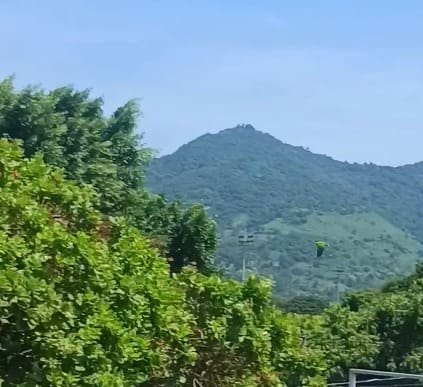
Until eventually, I lost sight of it.
And that was exactly what I wanted to happen.
Did It Immediately Rejoin the Other Chocoyos?
No.
At least, not that I could see.
When it left the cage, it chose its own direction and kept flying.
Why?
I have no way of knowing.
Maybe the chocoyos nearby weren’t part of its usual group. Maybe it simply decided to head toward another familiar place.
From that moment on, fortunately, that became its business again.
It was no longer a patient.
It was once again a wild animal making its own decisions.
Now Another Stage Begins: Looking for It Without Disturbing It
Since then, I’ve kept watch.
Every time I hear chocoyos nearby, I go outside with my camera and telephoto lens to try to observe them.
So far, I haven’t been able to identify the individual we released with certainty.
And it will probably be difficult.
Small parakeets can disappear incredibly well among the foliage, and once they are back among others of their species, identifying one particular individual can be complicated.
But I’m still trying.
Maybe one day it will return to the same guava tree.
Maybe I’ll manage to photograph it, and some characteristic of the scar will allow me to recognize it.
Or maybe I’ll never know anything about it again.
Not seeing it again wouldn’t necessarily mean that something went wrong. A free animal can move through an area much larger than anything we are capable of monitoring.
Either way, I hope that right now it is doing exactly what a chocoyo should be doing:
flying, searching for food, screaming with other chocoyos, and avoiding nosy humans like me. XD
Releasing an Animal Is Not Simply a Matter of Opening a Cage
I wanted to tell this story because I think it offers a simple way to explain something that sometimes gets lost when we talk about wildlife rescue.
A release should not be a symbolic act.
It isn’t simply a matter of opening a door because “the animal deserves to be free.”
Of course we want to see it free.
But precisely because we want it to survive, we first have to ask whether it actually has a reasonable chance of doing so.
In this particular case, we knew its species, where it had come from, and the exact place where it had been found. We knew it was a wild individual. It received veterinary care. We were able to observe its recovery and reassess its ability to fly before returning it to the same environment it had come from.
And even with all of those favorable conditions, the first time it seemed possible to release it, I decided not to because I still wasn’t convinced by its flight ability.
I believe that was one of the most important decisions of the entire process.
Because sometimes helping an animal means intervening.
And other times, it simply means waiting a little longer.
This experience also reinforced something I’ve believed for a long time:
the goal of wildlife rehabilitation should not be to get a beautiful photo of an animal leaving a cage.
The real question comes afterward:
does that animal have the skills it needs to stay alive once nobody is there to help it anymore?
In the case of this little chocoyo, we did everything we could to make sure the answer was yes.
The rest of the story, fortunately, belongs to him now. 🦜💚
Leave a Reply